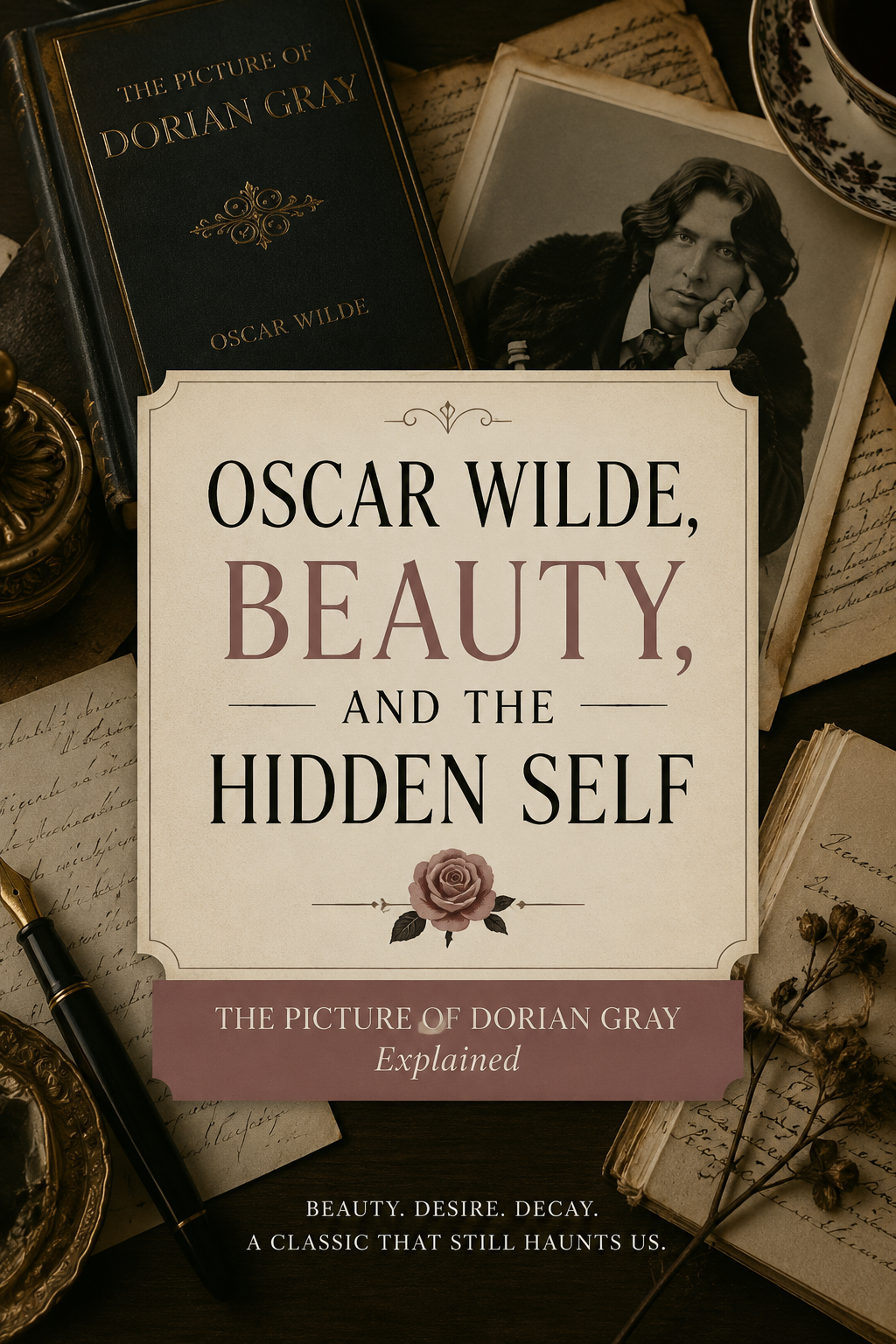
The Picture of Dorian Gray Explained: Beauty, Desire, Decay, and Oscar Wilde’s Fall
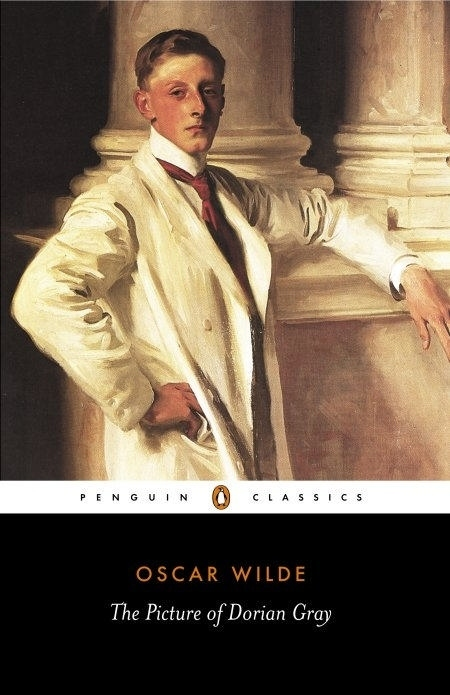
A beautiful face can be a dangerous thing when everyone mistakes it for innocence.
That is the disturbing power of The Picture of Dorian Gray. Oscar Wilde’s only novel is often described as a story about vanity, youth, and a cursed portrait. But that description is too small for a book this elegant and unsettling. Dorian Gray is not simply punished because he wants to stay beautiful. He is destroyed because he begins to believe that beauty can protect him from truth.
The novel begins with an image of perfection. Dorian Gray is young, charming, and almost impossibly beautiful. The painter Basil Hallward captures him in a portrait that seems to preserve not only his appearance, but the spell he casts over others. Then Lord Henry Wotton, a brilliant and dangerous aristocrat, tells Dorian that youth is the only thing worth having. Beauty will fade. Pleasure should be pursued. Influence is irresistible. Life should become art.
Dorian listens.
Looking at his portrait, he wishes that he could remain young while the painting grows old in his place. The wish comes true. His face remains untouched, but the portrait begins to change. Every cruelty, indulgence, betrayal, and moral failure appears on the canvas instead of his body.
This is the gothic miracle at the center of the novel. But Wilde’s real subject is not magic. It is secrecy.
Dorian’s portrait becomes the hidden room of the self: the place where shame, desire, corruption, fear, guilt, and time are stored away. Society continues to admire the beautiful young man. Only the painting knows what he has become.
A Novel Born Into Scandal
The Picture of Dorian Gray was first published in 1890 and revised into book form in 1891. From the beginning, it disturbed Victorian readers. The novel’s atmosphere of decadence, its fascination with beauty and sensation, and its coded treatment of desire all made it feel dangerous to a society that liked to imagine itself morally disciplined.
Victorian England prized respectability. Public virtue mattered. Reputation could define a person’s entire life. Yet Wilde’s novel suggested that respectability was often theatrical. A person could appear pure while living destructively. Society could condemn immorality in public while tolerating hypocrisy in private.
This tension made the book feel provocative. Wilde’s famous preface, added to the 1891 edition, insisted that books are not moral or immoral, only well written or badly written. He also wrote that “all art is quite useless,” a phrase often associated with the aesthetic movement, which valued beauty and art for their own sake.
But Dorian Gray is more complicated than a simple defense of art for art’s sake. The novel asks a sharper question: can beauty really be separated from morality? Can art remain innocent when it changes the way people live? Can a person turn life into a work of art without losing their soul?
Wilde does not answer these questions comfortably. That is why the novel still feels alive.
Beauty as Power
Dorian’s beauty is not just a physical trait. It is a form of power.
People admire him before they know him. They forgive him because he looks innocent. They project goodness onto him because his face seems untouched by experience. His beauty gives him social protection, and this protection becomes morally dangerous.
Wilde understood something that still feels painfully modern: beautiful people are often allowed to become symbols before they are allowed to be human. Dorian becomes a fantasy for Basil, an experiment for Lord Henry, an object of fascination for society, and eventually an idol to himself.
At first, he does not fully understand the power of his appearance. Lord Henry teaches him to see it. Once Dorian becomes conscious of his beauty, he also becomes afraid of losing it. Youth, which should have been a stage of life, becomes his entire identity.
This fear is what makes the portrait so tempting. If the painting can carry age, consequence, and ugliness for him, then Dorian can continue to live as a perfect surface. He can keep the face and hide the cost.
That is the tragedy. Beauty does not free Dorian. It traps him.
The Portrait as the Hidden Self
The portrait is one of the most unforgettable symbols in literature because it works on so many levels at once.
It is Dorian’s conscience.
It is his soul.
It is his secret history.
It is the truth his face refuses to show.
It is the self society cannot see.
This use of Gothic symbolism connects Wilde’s novel to other classic works of psychological horror. In Edgar Allan Poe’s The Fall of the House of Usher, the decaying house reflects the collapse of the family and the mind; in The Picture of Dorian Gray, the portrait performs a similar function by revealing the decay Dorian hides from society. You can read more about Gothic atmosphere, decay, and symbolism in my analysis of The Fall of the House of Usher.
At the beginning, the painting represents admiration. Basil paints Dorian as an ideal, almost as if he were preserving beauty itself. But after Dorian’s wish, the portrait becomes something much darker. It records what his body escapes. When Dorian behaves cruelly, the portrait changes. When he sinks deeper into corruption, the image becomes uglier. When he tries to ignore guilt, the painting remembers.
This is what makes the novel psychologically brilliant. Dorian does not entirely lack conscience. He simply relocates it. He puts it upstairs, locks the door, and continues appearing in society as if nothing has happened.
The locked room matters. Dorian’s real sin is not only corruption; it is concealment. He does not want to become good as much as he wants to remain unexposed. The portrait horrifies him because it tells the truth. But he also depends on it, because it allows him to keep lying.
In that sense, the painting is not merely supernatural. It is social. It represents the secret self every respectable culture tries to hide.
Lord Henry and the Seduction of Beautiful Ideas
Lord Henry Wotton does not corrupt Dorian with violence. He corrupts him with language.
That is what makes him so dangerous.
He speaks beautifully. His ideas are polished, witty, and seductive. He turns selfishness into philosophy. He makes emotional detachment sound intelligent. He suggests that yielding to temptation is a form of freedom. To an impressionable young man like Dorian, this is intoxicating.
Lord Henry does not need to command Dorian. He only needs to give him a new way to interpret himself.
This is one of Wilde’s most subtle insights: ideas can be glamorous and destructive at the same time. A sentence can become a temptation. A philosophy can become an excuse. A clever person can make cruelty sound like sophistication.
Lord Henry is not a simple villain. He is too charming for that. He is funny, observant, and often dazzling. But his brilliance has no tenderness. He treats life as an experiment and people as material. Dorian becomes his most beautiful experiment.
The tragedy is that Dorian takes seriously what Lord Henry often treats as performance. Lord Henry enjoys dangerous ideas as conversation. Dorian turns them into a life.
Basil Hallward and the Pain of Idealization
If Lord Henry sees Dorian as an experiment, Basil Hallward sees him as a revelation.
Basil’s relationship with Dorian is one of the emotional centers of the novel. He is not merely impressed by Dorian’s beauty; he is transformed by it. Dorian becomes his muse, his artistic awakening, and the figure through whom he discovers something powerful in himself.
But Basil’s love is also a form of idealization.
He does not fully see Dorian as an ordinary person. He sees him as beauty, inspiration, purity, and artistic meaning. This makes Basil sympathetic, but also vulnerable. To idealize someone is to place them in a frame. It can feel like devotion, but it can also deny the person’s full humanity.
That is part of the sadness of the novel. Dorian is surrounded by men who turn him into something symbolic. Basil turns him into art. Lord Henry turns him into an experiment. Society turns him into an image. Eventually, Dorian turns himself into a performance.
The Three Mirrors in Dorian Gray
Dorian Gray is not seen the same way by everyone around him. Each character reflects a different version of him back to himself.
Basil sees Dorian as art.
To Basil, Dorian is beauty, inspiration, and the living proof of artistic perfection.
Lord Henry sees Dorian as an experiment.
To Lord Henry, Dorian is a beautiful young mind that can be shaped by dangerous ideas.
Society sees Dorian as beauty.
To Victorian society, Dorian’s innocent face matters more than the rumors surrounding his life.
The portrait sees Dorian as he truly is.
Unlike everyone else, the portrait records the truth: his cruelty, guilt, corruption, and hidden decay.
Basil’s portrait contains more than Dorian’s beauty. It contains Basil’s feeling. His admiration, longing, and emotional secrecy are all bound up in the painting. This is why the portrait is dangerous even before it changes. It is not neutral art. It is art filled with desire.
Desire, Secrecy, and Victorian Society
One reason The Picture of Dorian Gray continues to fascinate readers is its atmosphere of hidden desire.
The novel does not speak about sexuality in a modern, direct way. It could not. Wilde was writing in a society where homosexuality was criminalized and where certain desires had to be coded, disguised, or displaced into art. But the emotional intensity between men in the novel is impossible to ignore.
Basil’s devotion to Dorian, Lord Henry’s fascination with him, and Dorian’s later double life all belong to a world where desire is shaped by danger. Love cannot always declare itself openly. Admiration becomes aesthetic language. Longing is hidden behind art. Social fear turns private emotion into secrecy.
This does not mean Dorian should be read only as a queer novel, or only as a biographical confession. That would flatten it. But the queer subtext matters because secrecy is one of the novel’s central structures. The portrait is hidden. Basil’s feelings are hidden. Dorian’s life is hidden. Victorian society’s hypocrisies are hidden.
Wilde understood what it meant to live in a culture where public image could be a form of survival.
That is why the novel’s treatment of desire feels so charged. The danger is not desire alone. The danger is what happens when desire must pass through shame, silence, performance, and fear.
Sibyl Vane and the Cruelty of Loving an Image
Sibyl Vane is sometimes treated as a secondary character, but she is crucial to understanding Dorian.
Dorian believes he loves her. But what he loves is not Sibyl as a full person. He loves her as an actress, an aesthetic experience, a collection of beautiful roles. She is Juliet, Rosalind, Imogen — a living gallery of Shakespearean romance. He loves the art she creates, not the woman behind it.
When Sibyl falls genuinely in love with him, her acting loses its illusion. She no longer wants to pretend because real feeling has entered her life. To her, this is an awakening. To Dorian, it is a disappointment.
His rejection of her is one of the first clear signs of his moral failure. He cannot tolerate the real woman once the performance disappears. Sibyl matters to him only when she is beautiful art.
This moment exposes a larger cruelty in the novel: people are destroyed when they are loved only as images. Sibyl is discarded when she becomes real. Basil is endangered because he loves too deeply. Dorian himself is ruined because he chooses image over soul.
Sibyl’s death marks the first great stain on Dorian’s hidden life. The portrait changes because something in him has changed. He has learned that he can harm another person and still appear untouched.
That discovery is fatal.
Victorian Morality and Public Hypocrisy
The world of Dorian Gray is obsessed with morality, but not necessarily with goodness.
This distinction is important.
Morality, in Dorian’s society, often means reputation. It means manners, appearances, class position, and the ability to avoid public scandal. Goodness would require compassion, honesty, responsibility, and self-knowledge. Wilde shows a society much more interested in the first than the second.
Dorian survives socially because he looks the part. He remains beautiful, elegant, and charming. Rumors gather around him, but his face contradicts them. People struggle to believe that someone so lovely could be corrupt.
This is one of the sharpest social criticisms in the novel. Wilde suggests that society does not always reward virtue. Sometimes it rewards performance. Sometimes it protects the people who know how to look innocent.
The portrait reveals what society refuses to see. Dorian’s face is public relations. The painting is evidence.
And as long as the evidence remains hidden, society continues its performance too.
Oscar Wilde’s Trial and the Cost of Being Exposed
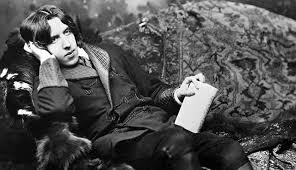
The connection between The Picture of Dorian Gray and Oscar Wilde’s own life gives the novel a haunting historical shadow.
Wilde was one of the most brilliant public figures of his age: witty, stylish, theatrical, and famous. He understood the art of self-presentation. He knew how to turn personality into performance. But he also lived in a society that could celebrate his brilliance while condemning his private life.
In 1895, Wilde became the center of a public scandal and criminal prosecution connected to homosexuality. His writings, including The Picture of Dorian Gray, were drawn into the moral atmosphere surrounding him. A novel about hidden desire, aestheticism, influence, and double lives became entangled with the public judgment of its author.
The irony is brutal.
Wilde had written a book that warned against simplistic moral readings of art. Yet Victorian society used art as evidence against the artist. The same culture that admired style and wit turned violently against him when private life became public scandal.
This does not mean Dorian is Wilde. Dorian is a fictional creation, not a direct self-portrait. But Wilde’s life and trial reveal the world that made Dorian possible: a world of masks, codes, reputations, forbidden desires, and social punishment.
Dorian hides the portrait because exposure would destroy him. Wilde’s society proved how real that danger could be.
Why The Picture of Dorian Gray Still Feels Modern
The novel still feels modern because we still understand the pressure to curate a self.
We may not have magical portraits in locked rooms, but we do have public images. We have profiles, photographs, reputations, beauty standards, social performance, and the constant pressure to appear desirable, successful, untouched, and in control.
Dorian’s tragedy speaks to an image-obsessed culture. His face remains perfect while the damage goes elsewhere. Today, that “elsewhere” might be anxiety, loneliness, secrecy, shame, emotional exhaustion, or the private cost of maintaining a public identity.
The portrait asks a question that still matters:
What happens to the parts of ourselves that do not fit the image?
Dorian does not become monstrous because he loves beauty. Beauty itself is not the villain. Wilde loved beauty too deeply to make such a simple argument. Dorian is destroyed because he separates beauty from responsibility. He wants pleasure without consequence, admiration without honesty, youth without time, and desire without truth.
That is why the novel is more than a gothic fantasy. It is a diagnosis of a culture that confuses surface with soul.
The Real Horror of Dorian Gray
The real horror of The Picture of Dorian Gray is not the aging portrait.
The real horror is Dorian’s growing ability to look away.
At first, the portrait shocks him. Then it fascinates him. Then it becomes part of his routine of secrecy. He learns to live beside the evidence of his own corruption. This is much more frightening than the supernatural premise itself.
Wilde shows how moral decay can become familiar. A person can be horrified by themselves and still continue. They can feel guilt and still choose concealment. They can know the truth and still prefer the mask.
Dorian’s final attempt to destroy the portrait is an attempt to destroy the evidence. But the portrait is not separate from him. It is his hidden self. When he attacks it, he attacks the truth of his own life.
The ending is so powerful because it restores the proper order. The portrait becomes beautiful again. Dorian’s body finally reveals what his soul has become. The public image collapses, and the hidden reality takes its place.
In the end, truth returns to the body.
The Surface Cannot Save the Soul
The Picture of Dorian Gray endures because it is beautiful and merciless at the same time. It gives readers velvet rooms, witty conversations, artistic obsession, forbidden desire, gothic horror, and social critique. But beneath all that elegance, it asks a severe question: what is the cost of living only for the image?
Dorian Gray wants the impossible. He wants beauty without aging, pleasure without guilt, reputation without truth, and desire without exposure. For a while, the world lets him have it. His face remains perfect. The doors stay open. Society continues to admire him.
But the portrait waits.
That is the moral intelligence of Wilde’s novel. Everything hidden still exists. Everything denied still leaves a mark. The self can be disguised, but not erased.
Dorian’s tragedy is not simply that he becomes ugly inside. It is that he lives in a world where looking beautiful matters more than becoming honest.
And in that world, the portrait is not the monster.
It is the only thing telling the truth.
FAQ for The Picture of Dorian Gray
What is the main message of The Picture of Dorian Gray?
The main message is that a life built only on beauty, pleasure, and appearances becomes morally and spiritually destructive. The novel shows that hidden corruption does not disappear simply because society cannot see it.
What does the portrait symbolize?
The portrait symbolizes Dorian’s conscience, hidden self, moral decay, shame, and soul. While his public face remains young and beautiful, the portrait reveals the truth of his choices.
Why was The Picture of Dorian Gray controversial?
The novel was controversial because it challenged Victorian ideas about morality, art, sexuality, reputation, and respectability. Its atmosphere of decadence and coded desire made many contemporary readers uncomfortable.
Is Dorian Gray based on Oscar Wilde?
Dorian Gray is not simply Oscar Wilde. However, the novel reflects many pressures Wilde understood deeply: public performance, hidden desire, beauty, reputation, social judgment, and the danger of exposure.
Why is The Picture of Dorian Gray still relevant today?
It remains relevant because modern culture is still obsessed with youth, beauty, image, reputation, and curated identity. Dorian’s portrait feels like a powerful symbol for the hidden cost of maintaining a perfect public self.
Booksinsta Reading Guide
Key Takeaways
- The portrait is Dorian’s hidden truth: it carries the corruption his beautiful face refuses to show.
- Beauty protects Dorian, but it also traps him inside a life built on appearance.
- Wilde exposes Victorian hypocrisy: a society obsessed with morality but fascinated by scandal.
- The novel’s desire is coded and dangerous, shaped by secrecy, admiration, and social fear.
- Oscar Wilde’s own fall makes the novel feel hauntingly connected to shame, exposure, and public judgment.
- The book still feels modern because today’s culture is also obsessed with beauty, youth, image, and performance.