Where to Start With Greek Mythology: A Beginner’s Guide for Readers Who Don’t Know the Myths Yet
Greek mythology can feel overwhelming at first because it is not one book, one timeline, or one official version.
It is a vast tradition made of gods, heroes, wars, punishments, transformations, family conflicts, ancient poems, theatrical tragedies, local legends, later Roman adaptations, and centuries of reinterpretation. A single figure can appear in different versions depending on the poet, the city, the ritual context, or the literary purpose. One myth may look simple in a handbook and become morally devastating when it appears in a tragedy.
This is why many beginners feel lost. They try to enter Greek mythology as if it were a modern fantasy series with a fixed order, a complete map, and a single canon. But Greek mythology does not work that way. It is older, more layered, and more contradictory. It grew out of oral storytelling, religious imagination, poetry, theater, politics, family structures, ritual, and later literary transformation.
The good news is that you do not need to know everything before you begin.
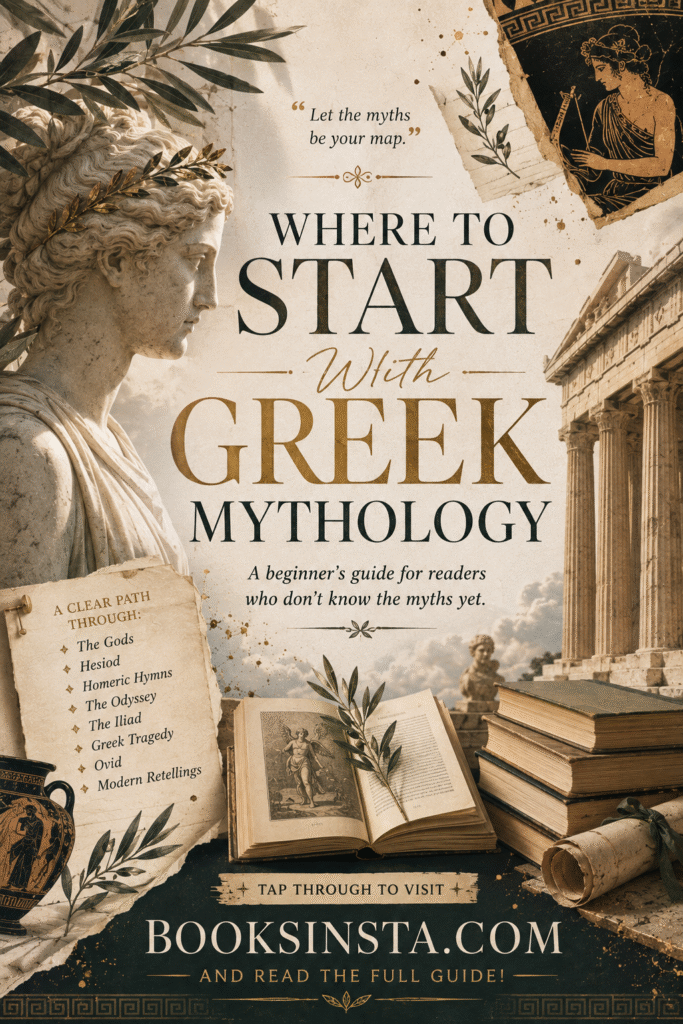
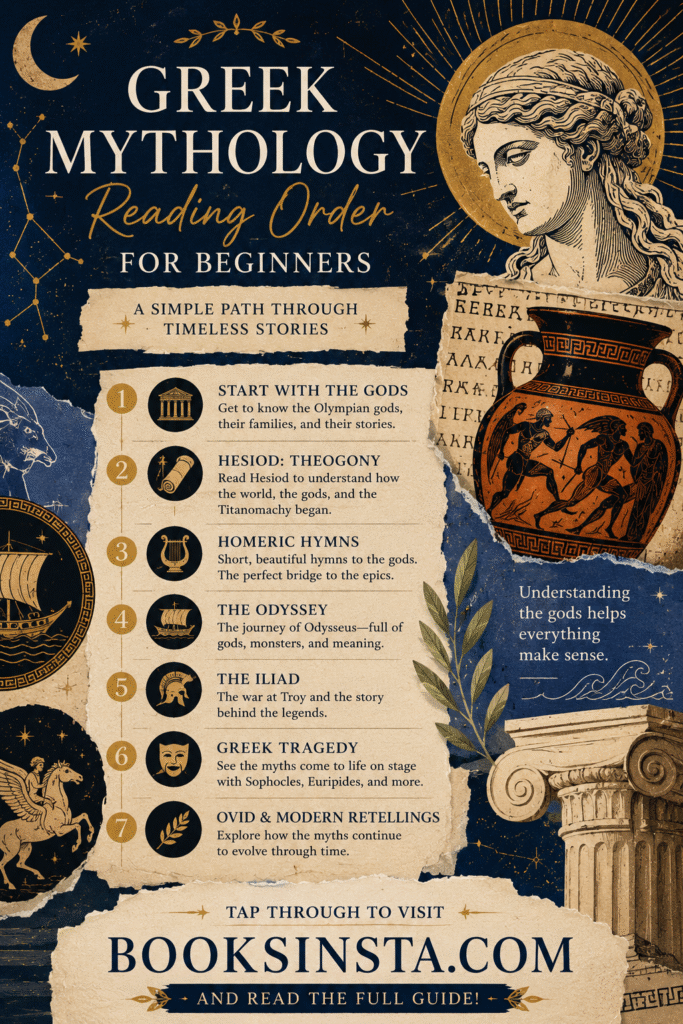
In fact, trying to learn every god, monster, hero, and family tree at once is one of the fastest ways to make Greek mythology feel impossible. A better approach is to enter it in stages: first the gods, then the major mythic patterns, then Homer, then Greek tragedy, then later authors and modern retellings.
This guide is for readers who want a serious but accessible way into Greek mythology. Not a childish summary. Not a shallow list of modern fantasy retellings. Not an academic wall of names. Instead, this is a reading path for people who want to understand the ancient foundations: the gods, Homer, Hesiod, the playwrights, the epics, the tragedies, and the wider literary tradition that kept these myths alive.
Greek mythology becomes much easier when you stop treating it like a test and start treating it like a tradition.
You enter gradually.
First, you meet the gods.
Then you watch how they interfere in human lives.
Then Homer begins to make sense.
Then tragedy becomes devastating.
Then later retellings become more interesting because you understand what they are responding to, challenging, or repairing.
Key Takeaways
If you are completely new to Greek mythology, do not begin by trying to read everything at once.
A better beginner path is:
- Start with the gods — learn the Olympians, their powers, rivalries, and family history.
- Read Hesiod’s Theogony — the essential ancient source for the origins of the gods.
- Read selected Homeric Hymns — to understand the gods as vivid personalities.
- Move to The Odyssey — the most accessible Homeric epic for many beginners.
- Read The Iliad next — once you are ready for war, rage, grief, and heroic culture.
- Read Greek tragedy — especially Sophocles, Euripides, and Aeschylus.
- Use myth handbooks carefully — as references, not replacements for the original literature.
- Read Ovid later — important, but Roman, not the Greek foundation.
- Explore modern retellings after the ancient sources — they become richer when you know what they are reimagining.
The most important rule is simple:
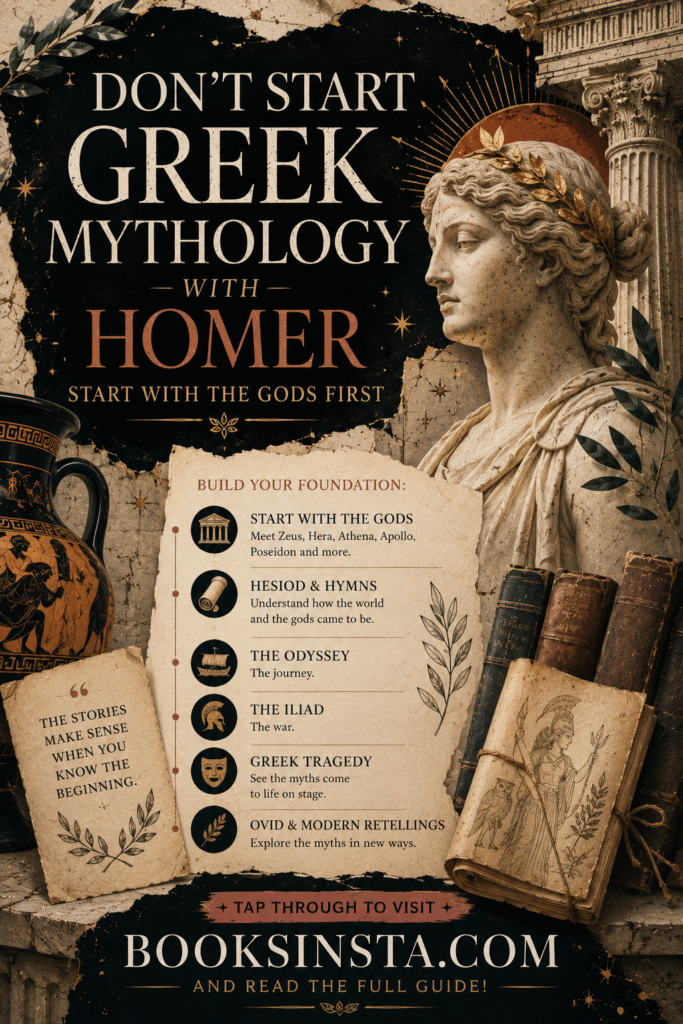
Do not start with Homer before you understand the gods.
Homer is essential, but the epics become much clearer once Athena, Poseidon, Hera, Zeus, Apollo, Aphrodite, Hermes, and the other gods already feel familiar.
Why Greek Mythology Feels So Confusing at First
Greek mythology feels confusing because it was never designed as one neat modern book.
There is no single official version of every myth. There is no one author who “invented” Greek mythology. There is no final authorized timeline that explains everything in order. Ancient myth developed over time through oral poetry, local cults, ritual practices, regional stories, epic tradition, dramatic performance, and later literary adaptation.
That means Greek mythology often contains contradictions.
One version of a myth may emphasize divine justice. Another may expose divine cruelty. One poet may make a hero look noble. A playwright may later take the same hero’s family and turn it into a study of violence, guilt, and moral collapse. A woman who appears briefly in epic may become the center of a modern feminist retelling thousands of years later.
This does not make the myths weak. It makes them alive.
Greek mythology is a tradition of repeated interpretation. The same figures keep returning because they are flexible enough to hold different fears, values, and questions.
A beginner usually struggles for five reasons.
First, there are too many names. The gods have Greek names, Roman names, family relationships, titles, symbols, and areas of power. Zeus is Jupiter in Roman tradition. Aphrodite becomes Venus. Athena becomes Minerva. This can be confusing when Greek and Roman versions are mixed together.
Second, the myths are not always chronological. The creation of the gods belongs to one kind of mythic time. The heroic age belongs to another. The Trojan War is connected to many stories before and after it, but those stories appear in different works.
Third, the gods behave like personalities, not moral examples. They desire, punish, deceive, protect, compete, grieve, and interfere. They are powerful, but they are not always wise. They are divine, but they are emotionally recognizable.
Fourth, ancient authors used myths for different purposes. Homer uses mythic material for epic poetry. Hesiod organizes divine genealogy and cosmic order. Aeschylus turns myth into inherited guilt and justice. Sophocles uses myth to explore fate, truth, and moral conflict. Euripides often exposes the emotional damage beneath heroic culture. Roman writers like Ovid reshape Greek myths into elegant, often unsettling transformation stories.
Finally, modern culture often introduces Greek mythology through fragments: a movie, a novel, a painting, a zodiac reference, a feminist retelling, a school assignment, or a quote about Achilles or Medusa. These fragments are interesting, but without the ancient framework, they can feel disconnected.
So if Greek mythology feels confusing, it is not because you are missing some obvious secret. You are trying to enter a tradition that has been retold for centuries.
The solution is not to memorize everything.
The solution is to choose the right doorway.
Do Not Start With Homer First — Start With the Gods
Many reading guides begin with Homer. That makes sense in one way. The Iliad and The Odyssey are among the central works of ancient Greek literature, and they are foundational for understanding heroic myth. Homer is unavoidable.
But for a complete beginner, Homer is not always the easiest first step.
The problem is that Homer does not introduce the gods as if the reader is meeting them for the first time. The epics assume a mythic world already in motion. Athena protects certain heroes. Poseidon holds grudges. Hera has her own loyalties. Aphrodite intervenes in desire and beauty. Apollo punishes and protects. Zeus balances power, fate, and divine politics, though not always in ways that feel morally satisfying.
If you do not know who these gods are, their actions can feel random.
Why does Athena help Odysseus?
Why is Poseidon against him?
Why do Hera and Athena oppose Troy?
Why does Aphrodite protect Paris?
Why does Apollo matter so much in The Iliad?
Why does Zeus not simply fix everything?
These questions are not distractions from Homer. They are part of the fabric of the epics. The gods are not background decoration. They are active forces. They shape war, desire, punishment, strategy, weather, plague, hospitality, prophecy, and survival.
That is why the best first step is not Homer.
The best first step is the divine world.
Before reading the epics, a beginner should understand the basic structure of the gods: where they come from, how Zeus came to power, what each major god represents, and how divine relationships often repeat patterns of rivalry, jealousy, desire, revenge, and protection.
Once you know the gods, Homer becomes far richer.
The Odyssey stops being only a travel story. It becomes a poem about survival under divine pressure.
The Iliad stops being only a war poem. It becomes a severe study of rage, honor, mortality, and the terrifying closeness between gods and human violence.
Greek mythology begins to make sense when you understand that human lives are never fully separate from divine conflict.
Step One: Begin With the Origins of the Gods
The best ancient starting point for the gods is Hesiod’s Theogony.
Hesiod is one of the earliest Greek poets whose work survives, and Theogony is essential because it gives readers a mythic genealogy of the cosmos and the gods. It begins with Chaos and moves through Gaia, Uranus, Cronus, the Titans, Zeus, and the Olympians. Theoi’s Classical Texts Library lists Hesiod’s Theogony among its ancient mythology texts, alongside Homer, the Homeric Hymns, and other early Greek epic material.
This is not a modern novel, and you should not expect it to behave like one. Theogony is a poetic account of origins, power, birth, succession, and divine order. It can feel strange at first because it is full of names and genealogies. But its central logic is powerful.
Greek mythology begins with family conflict.
The world is not born peacefully. Power passes violently from one generation to the next. Children threaten fathers. Fathers fear children. Mothers intervene. The cosmos is shaped by desire, force, prophecy, fear, and rebellion.
This matters because the same patterns keep appearing later in myth.
The struggle between generations is not only a divine issue. It reappears in heroic families, royal houses, tragic plays, and stories about inheritance, curses, revenge, and legitimacy. Greek mythology is deeply interested in what families pass down: power, guilt, violence, obligation, and unfinished conflict.
Hesiod helps you understand that the Olympian world is not simply a group of gods sitting beautifully on Mount Olympus. It is the result of conflict. Zeus rules because an older order was overthrown. The Olympians inherit a universe already marked by violence.
That is why starting with the gods is not a decorative step. It is structural.
If you understand the divine family, you begin to understand the emotional grammar of Greek myth.
Step Two: Read the Homeric Hymns to Understand the Gods as Characters
After Hesiod, read selected Homeric Hymns.
The Homeric Hymns are ancient poems addressed to the gods. They are not “hymns” in the modern church-song sense. They are poetic narratives that honor and introduce divine figures, often telling key stories about their birth, powers, rituals, or relationships with mortals. Theoi’s Classical Texts Library includes the Homeric Hymns among its major classical mythology texts.
These hymns are useful because they make the gods feel alive.
Hesiod gives you structure. The Homeric Hymns give you presence.
Start with these:
The Hymn to Demeter
This is one of the most important texts for understanding Persephone, Demeter, grief, motherhood, loss, and the seasons. It is also one of the most emotionally accessible ancient mythological texts. It shows divine power through maternal grief and the disruption of the natural world.
Read it if you want to understand why Greek myth is not only about male heroes and war. It is also about absence, mourning, negotiation, and the cost of divine decisions.
The Hymn to Apollo
This hymn helps readers understand Apollo as a god of prophecy, music, sacred authority, beauty, and danger. Apollo is not simply a bright god of sunlight in the casual modern sense. He is associated with order, plague, purification, prophecy, and the terrifying clarity of divine distance.
This matters when you later read The Iliad, where Apollo’s anger has real consequences.
The Hymn to Hermes
Hermes is one of the most fascinating gods for beginners because he is clever, mobile, comic, and disruptive. He crosses boundaries: between gods and humans, life and death, order and trickery, theft and invention.
The Hymn to Hermes shows the god’s intelligence and mischief. It also helps the reader understand that Greek divinity is not always solemn. Sometimes it is playful, cunning, and dangerously inventive.
The Hymn to Aphrodite
Aphrodite is often reduced to beauty or romance, but that is too simple. In Greek mythology, desire is a power. It disrupts judgment, humiliates the proud, rearranges families, starts wars, and exposes vulnerability.
The Hymn to Aphrodite shows that even gods are not fully outside the force of desire.
The Hymn to Dionysus
Dionysus is essential if you want to understand Greek tragedy, theater, ecstasy, madness, social reversal, and the fear of losing control. He is not only the god of wine. He is a god of transformation, collective emotion, performance, and danger.
This matters especially when you later read Euripides’ The Bacchae.
The Homeric Hymns are a beautiful second step because they help you stop thinking of the gods as names on a chart. They become forces with moods, histories, claims, wounds, and methods.
Step Three: Learn the Main Gods Before Reading the Epics
You do not need to memorize every minor deity before reading Homer. But you should know the major Olympians and the emotional patterns associated with them.
Here is a simple guide.
Zeus
Zeus is king of the gods, associated with sky, thunder, kingship, authority, law, and divine order. But he is also a figure of desire, instability, and family politics. He rules, but his rule is never emotionally simple.
Hera
Hera is associated with marriage, queenship, dignity, and legitimate divine authority. She is often portrayed through jealousy and anger, but that should not be read too shallowly. Hera’s rage often emerges from the humiliations built into Zeus’s power.
Poseidon
Poseidon rules the sea and is associated with earthquakes, horses, storms, and anger. In The Odyssey, his hostility toward Odysseus is one of the central divine pressures shaping the journey.
Hades
Hades rules the underworld. He is not the same as the Christian devil, and the Greek underworld is not simply “hell.” Hades represents death, wealth beneath the earth, and the unavoidable boundary all mortals eventually cross.
Athena
Athena is the goddess of wisdom, strategy, craft, and intelligent warfare. She often supports heroes not through raw force, but through planning, disguise, counsel, and tactical intelligence. She is crucial in The Odyssey.
Apollo
Apollo is associated with prophecy, music, plague, purification, order, and beauty. He can seem radiant and severe at the same time. In epic and tragedy, Apollo often represents divine authority that humans cannot easily challenge.
Artemis
Artemis is associated with hunting, wilderness, virginity, childbirth, young girls, and female independence. She is protective and dangerous, especially when boundaries are violated.
Aphrodite
Aphrodite is the goddess of beauty and desire, but desire in Greek mythology is not soft or harmless. It can destabilize families, cities, and heroic reputations.
Hermes
Hermes is the god of travelers, thieves, messages, boundaries, trade, and movement between worlds. He is clever, flexible, and often useful in moments of transition.
Demeter
Demeter is associated with agriculture, fertility, motherhood, grief, and seasonal change. Through the story of Persephone, she becomes one of the most emotionally powerful figures in Greek myth.
Dionysus
Dionysus is associated with wine, theater, ecstasy, madness, masks, liberation, and social disruption. He often appears where order begins to crack.
Ares
Ares is the god of war in its violent, blood-soaked, chaotic form. Unlike Athena, who represents strategy, Ares represents the brutality and appetite of conflict.
Knowing these gods will change the way you read ancient literature. When Athena appears, you will notice strategy. When Aphrodite intervenes, you will notice desire as power. When Apollo acts, you will feel the severity of divine order. When Dionysus arrives, you should expect transformation, instability, and danger.
Greek mythology becomes more readable when the gods are not treated as decorative symbols, but as active personalities.
Step Four: Read The Odyssey Before The Iliad
Once you have a basic understanding of the gods, move to Homer’s The Odyssey.
For many beginners, The Odyssey is the best first Homeric epic. It has a clearer narrative shape than The Iliad: a hero trying to return home after the Trojan War. There are islands, monsters, temptations, disguises, stories within stories, divine interventions, and the long emotional problem of homecoming.
But do not mistake accessibility for simplicity.
The Odyssey is not just an adventure story. It is a poem about what it means to return after violence has changed you. Odysseus is not only trying to reach Ithaca. He is trying to recover a place in the world: as husband, father, king, survivor, and storyteller.
The central question is not only “Will he get home?”
It is also:
What does home mean after war?
How does a person remain themselves through suffering?
What is intelligence worth when brute strength is not enough?
How much of survival depends on storytelling?
What does loyalty mean across absence, temptation, and time?
The gods matter deeply here.
Athena’s guidance is not random; she is drawn to intelligence, strategy, and controlled speech. Poseidon’s anger is not decorative; it turns the sea into a moral and physical obstacle. Zeus’s role reminds the reader that mortals may act freely, but not outside a larger divine order.
This is why reading about the gods first helps. You begin to recognize that The Odyssey is not simply a chain of adventures. It is a world in which human choices unfold under divine attention.
The poem is also important because it gives readers one of the most enduring figures in literature: Odysseus, the complicated survivor. He is brave, intelligent, manipulative, patient, proud, eloquent, and flawed. He is not a simple hero. He is a man shaped by war, longing, danger, and the need to keep inventing ways to survive.
For a beginner, The Odyssey offers the most welcoming epic entrance into Greek mythology because it combines plot movement with emotional depth.
Start here before The Iliad if you want a clearer narrative path.
Step Five: Read The Iliad When You Are Ready for War and Grief
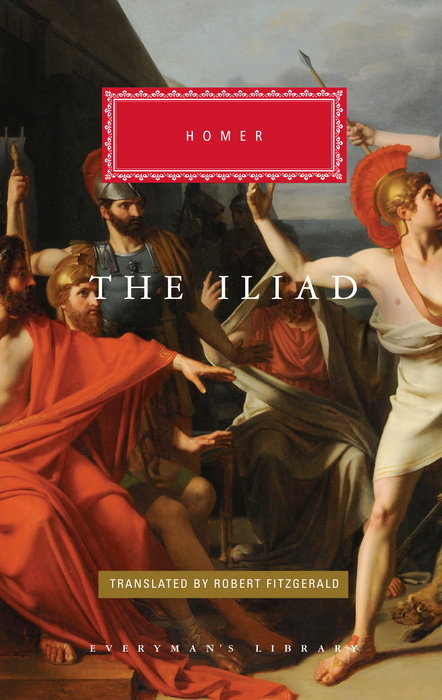
After The Odyssey, read Homer’s The Iliad.
Many beginners assume The Iliad tells the whole Trojan War from beginning to end. It does not. It focuses on a specific period near the end of the war, centered on Achilles’s rage and its consequences.
That matters.
The Iliad is not a complete war chronicle. It is a poem about rage, honor, pride, grief, death, and the emotional cost of heroic culture.
The opening word of the poem is traditionally “rage.” That tells you almost everything about its moral atmosphere. Achilles is not simply a great warrior. He is a figure through whom the poem explores what happens when honor, status, grief, and mortality become unbearable.
The world of The Iliad is severe. Men fight for glory, but glory is inseparable from death. Kings command, but not always wisely. Warriors seek honor, but honor can become destructive. The gods intervene, but divine involvement does not make the world just. Women are often treated as prizes, captives, mourners, or symbols of male conflict, which is one reason later tragedy and modern retellings return to the Trojan War with such force.
The poem asks difficult questions without giving simple answers.
What is a life worth if it is remembered?
What is glory worth if it destroys tenderness?
What does grief do to the powerful?
Can heroic culture survive its own violence?
What does war do not only to bodies, but to the moral imagination?
The gods in The Iliad are deeply involved. Hera, Athena, Aphrodite, Apollo, Zeus, Thetis, and others all participate in the poem’s conflicts. If you read The Iliad before knowing the gods, the divine scenes can feel confusing. Once you understand the gods’ relationships and personalities, those scenes become much more meaningful.
The Iliad is harder than The Odyssey, but it is also one of the most emotionally powerful works in world literature.
Read it when you are ready for mythology without comfort.
Step Six: Read Greek Tragedy to Understand Myth as Emotional Conflict
If Homer gives you the heroic world, Greek tragedy shows you what that world does to families, cities, women, rulers, and the human soul.
Greek tragedy developed in Athens as a public dramatic form, especially associated with religious festivals of Dionysus. The best-known tragedians are Aeschylus, Sophocles, and Euripides; an overview by Thomas R. Martin through Perseus notes these three as the major Athenian tragic poets and places tragedy in the context of festival performance and civic culture.
This matters because tragedy was not private entertainment in the modern sense. It was public art. Myths were performed before a community. Stories of gods, kings, women, wars, curses, and family violence became ways for the city to think about justice, power, suffering, and responsibility.
Greek tragedy is one of the best ways to understand mythology because it does not treat myth as decoration. It turns myth into pressure.
A myth that sounds simple in summary becomes morally unbearable onstage.
A woman abandoned by a hero becomes a voice of rage.
A daughter burying her brother becomes a challenge to political power.
A king seeking truth becomes the instrument of his own destruction.
A victorious general returning from war enters a house full of blood memory.
A god of ecstasy arrives in a city that refuses to recognize him.
That is the power of tragedy.
It makes myth human, political, and psychologically exact.
Aeschylus: Myth as Inherited Guilt and Justice
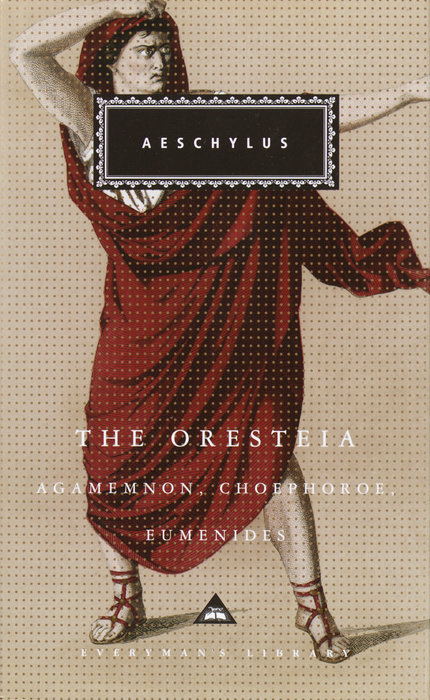
Start with Aeschylus, especially The Oresteia.
The Oresteia is a trilogy made up of:
- Agamemnon
- The Libation Bearers
- The Eumenides
It follows the aftermath of the Trojan War through the cursed house of Atreus. Without spoiling the dramatic experience, it is enough to say that this trilogy is about family bloodshed, revenge, inherited guilt, divine pressure, and the movement from private vengeance toward public justice.
Aeschylus is essential because he makes mythology feel generational. One crime does not end with one person. Violence echoes. Families inherit consequences. Justice is necessary, but never clean.
His work is especially useful for readers who want to understand how Greek myth thinks about law, punishment, gods, blood, and civic order.
Also read:
- Prometheus Bound — though its authorship has long been debated
- Seven Against Thebes
- The Suppliants
- The Persians
Booksinsta angle:
Aeschylus shows mythology as a courtroom of the soul. Every act has ancestors. Every punishment has history. Every form of justice carries the memory of violence behind it.
Sophocles: Myth as Moral Pressure
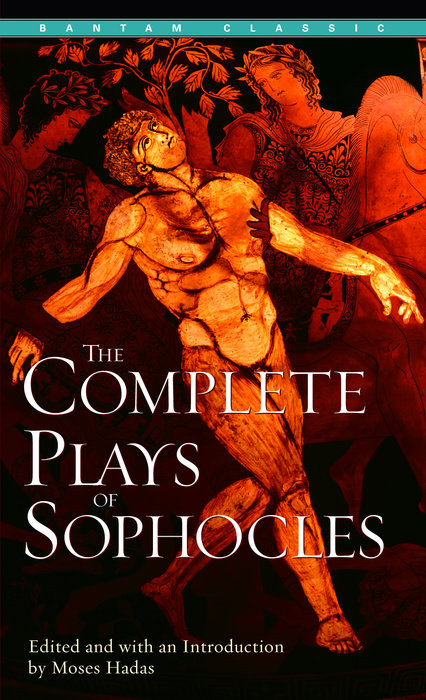
For beginners, the best Sophocles plays to start with are:
- Antigone
- Oedipus Rex
- Electra
- Philoctetes
Sophocles is where mythology becomes moral architecture.
His characters often stand at the center of competing truths. They are not always trapped because they are foolish. They are trapped because every available choice has a cost.
In Antigone, the conflict is not simply between one stubborn woman and one stubborn ruler. It is between family duty, religious obligation, state authority, gender, grief, and law. That is why the play still feels politically alive.
In Oedipus Rex, the drama is not only about fate. It is about knowledge. What does it mean to seek truth when truth may destroy the life you have built? What happens when intelligence becomes the path to suffering?
In Electra, grief and revenge become emotional systems. In Philoctetes, abandonment, pain, usefulness, and dignity become central questions.
Sophocles is powerful because he rarely makes moral life easy. His plays suggest that human beings can be sincere and still destructive, loyal and still dangerous, right and still doomed.
Booksinsta angle:
Sophocles is where mythology stops being a distant story and becomes a study of what happens when principles collide.
Euripides: Myth as Emotional Damage
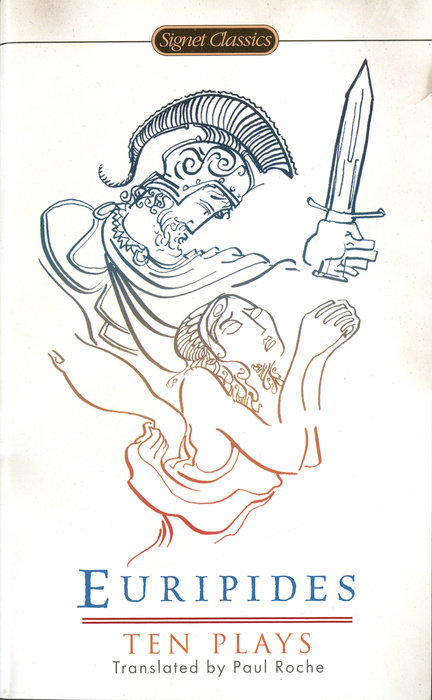
Euripides is often the most modern-feeling of the Greek tragedians.
Start with:
- Medea
- The Bacchae
- The Trojan Women
- Hippolytus
- Iphigenia at Aulis
- Helen
Euripides is essential because he often turns attention toward those harmed by heroic culture: women, captives, foreigners, the abandoned, the humiliated, the socially powerless, and the emotionally extreme.
In Medea, myth becomes a study of exile, betrayal, intelligence, gender, and rage. The play is disturbing because it refuses to make emotional injury simple.
In The Bacchae, Dionysus becomes a force of divine recognition, madness, social breakdown, theater, and punishment. It is one of the most unsettling plays in Greek literature because it asks what happens when a society refuses to acknowledge the irrational forces it cannot control.
In The Trojan Women, the glory of war is stripped away. What remains is grief, captivity, and the voices of women after the heroic story has already been told.
Euripides often exposes what epic leaves in the background.
He asks: who suffers when heroes seek glory? Who is sacrificed for political power? What happens to women when men call violence honor? What if the gods are not morally comforting?
Booksinsta angle:
Euripides makes Greek mythology emotionally dangerous. He reminds readers that behind every heroic legend, someone else may be paying the price.
Step Seven: Use Myth Handbooks and Later Authors Carefully
After you have some grounding in the gods, Homer, and tragedy, myth handbooks become much more useful.
A handbook should not replace literature. It helps you navigate it.
Apollodorus, The Library of Greek Mythology
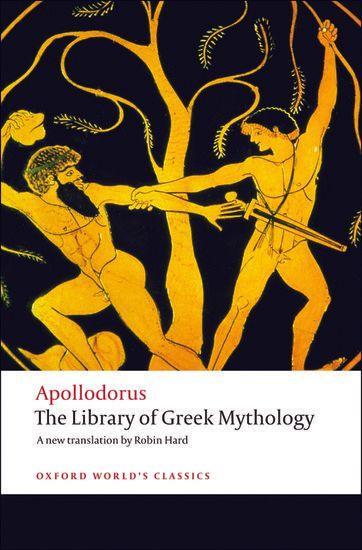
This is one of the most useful ancient mythographic works for readers who want to understand genealogies, myth cycles, and how stories connect. It is compact, organized, and helpful when you are confused about who belongs to which family or which hero belongs to which cycle.
Use it as a reference.
Do not expect it to give the emotional force of Homer or tragedy. Its value is clarity.
Apollonius of Rhodes, Argonautica
This is the major ancient epic about Jason, Medea, the Argonauts, and the quest for the Golden Fleece.
It matters because it gives readers Medea before Euripides’ Medea. That is important. Before she becomes the famous abandoned woman of tragedy, she appears as a young woman, a magician, a helper, a figure of desire and danger, and someone already caught between family, love, betrayal, and power.
Read Argonautica if you want to understand heroic quest tradition beyond Homer.
Ovid, Metamorphoses
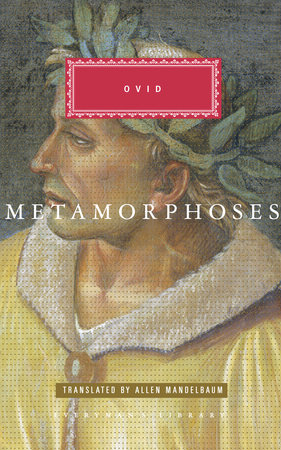
Ovid is essential, but he is Roman, not Greek.
This distinction matters.
Many stories modern readers associate with Greek mythology are known through Ovid’s Latin literary versions: Narcissus, Daphne, Arachne, Orpheus and Eurydice, Pygmalion, and many transformation myths.
Ovid is dazzling, elegant, cruel, sensual, and influential. But he should be read as part of myth reception, not as the original Greek foundation.
If Hesiod helps you understand divine genealogy, and Homer helps you understand epic heroism, and tragedy helps you understand moral conflict, Ovid helps you understand transformation.
His myths ask what happens when desire, punishment, art, speech, or divine power changes a body forever.
Where Do Modern Retellings Fit?
Modern retellings can be meaningful, intelligent, and emotionally powerful.
But they should not replace the ancient sources.
They become more interesting when you understand what they are responding to.
A modern retelling may shift the center from hero to captive, from husband to wife, from warrior to woman, from victory to grief, from divine order to injustice. That shift matters more when you know the older version behind it.
For example, a retelling of Penelope becomes richer when you have read The Odyssey. A retelling of Briseis becomes sharper when you understand how women are treated in The Iliad. A retelling of Medea becomes more complex when you have met her in both Apollonius and Euripides.
Modern retellings are not the foundation. They are conversations with the foundation.
Some important modern works to explore later include:
- Margaret Atwood, The Penelopiad
- Pat Barker, The Silence of the Girls
- Natalie Haynes, A Thousand Ships
- Natalie Haynes, Stone Blind
- Madeline Miller, Circe
- Madeline Miller, The Song of Achilles
- Ursula K. Le Guin, Lavinia
- Christa Wolf, Cassandra
- Colm Tóibín, House of Names
- Anne Carson, Autobiography of Red
Read them after you know the ancient material, and they will feel less like replacements and more like arguments.
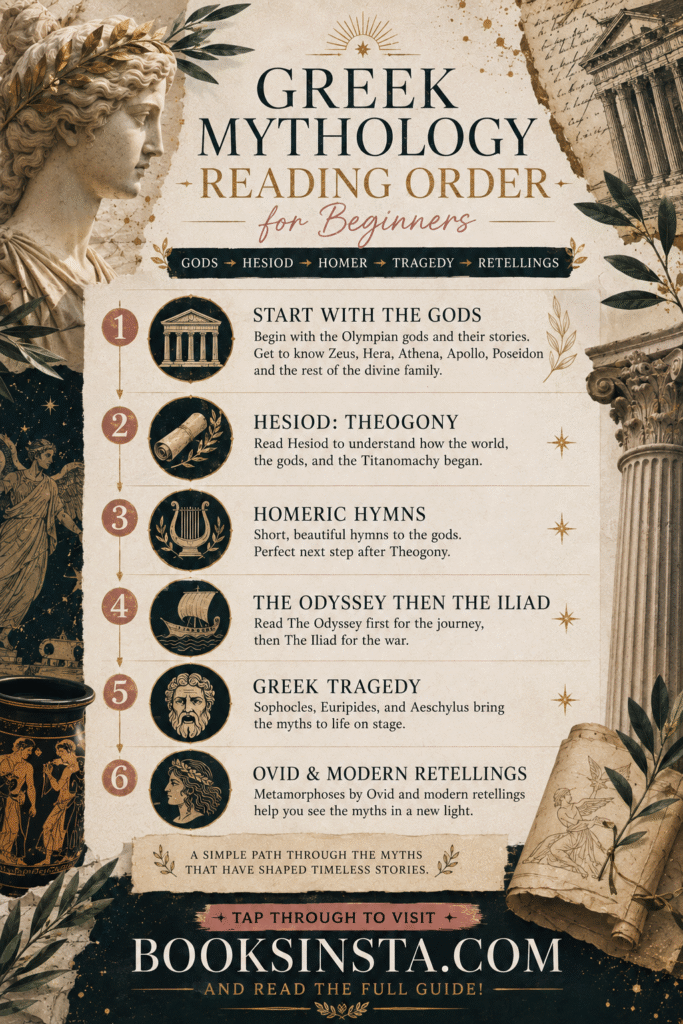
A Simple Beginner Reading Path
If you are completely new to Greek mythology, here is the cleanest path.
1. Learn the main Olympian gods
Start with Zeus, Hera, Poseidon, Hades, Athena, Apollo, Artemis, Aphrodite, Hermes, Demeter, Dionysus, and Ares.
Do not memorize every detail. Learn their powers, relationships, and emotional patterns.
2. Read Hesiod’s Theogony
This gives you the origins of the gods and the structure of divine power.
3. Read selected Homeric Hymns
Begin with Demeter, Apollo, Hermes, Aphrodite, and Dionysus.
4. Read The Odyssey
Start Homer through journey, homecoming, intelligence, disguise, and divine pressure.
5. Read The Iliad
Move into war, rage, glory, grief, and heroic violence.
6. Read three Greek plays
Start with:
- Sophocles’ Antigone
- Euripides’ Medea
- Sophocles’ Oedipus Rex
These three will show you how myth becomes moral and emotional drama.
7. Read The Oresteia
Aeschylus will help you understand inherited guilt, revenge, divine law, and justice.
8. Use Apollodorus as a reference
Return to it whenever family trees and myth cycles become confusing.
9. Read Ovid later
Read Metamorphoses when you want transformation myths and later literary influence.
10. Explore modern retellings last
Modern retellings are best when you can recognize what they are changing.
Common Beginner Mistakes
Starting with Homer without knowing the gods
This is the most common mistake. Homer becomes much easier when the gods already feel familiar.
Trying to memorize every family tree
You do not need to master every genealogy before reading. Learn the major structures first, then return to details as needed.
Thinking there is one official version of every myth
Greek mythology is full of variations. Contradiction is part of the tradition.
Mixing Greek and Roman names without noticing
Zeus is Greek. Jupiter is Roman. Aphrodite is Greek. Venus is Roman. Athena is Greek. Minerva is Roman. The stories overlap, but the cultural contexts differ.
Reading only modern retellings
Modern retellings can be valuable, but they are not the ancient foundation.
Treating myths as simple fantasy
Greek myths are not merely fantasy plots. They are religious, poetic, political, social, and psychological stories.
Skipping tragedy
This is a major loss. Greek tragedy is where many myths become emotionally and morally unforgettable.
Why Greek Mythology Still Matters
Greek mythology survives because it does not belong to only one kind of reader.
It belongs to readers interested in literature, theater, art, psychology, gender, politics, philosophy, history, fantasy, and culture. The myths remain powerful because they turn human patterns into memorable stories.
They understand pride.
They understand jealousy.
They understand desire.
They understand grief.
They understand revenge.
They understand mothers, daughters, fathers, sons, lovers, kings, strangers, captives, and exiles.
They understand that power is rarely innocent.
They understand that beauty can be dangerous.
They understand that families can carry violence across generations.
The gods are powerful, but they are not emotionally perfect. The heroes are admired, but they are not morally simple. The women are often silenced in the oldest texts, but tragedy and later reinterpretation keep bringing their voices back. The monsters are frightening, but often symbolic. The wars are epic, but their consequences are intimate.
That is why mythology keeps returning.
Every generation finds a different question inside it.
Ancient audiences might have seen divine order, civic conflict, ritual memory, or aristocratic heroic values. Later artists saw beauty, transformation, and symbolic drama. Modern readers often see trauma, gender, power, political violence, and the struggle to reclaim silenced perspectives.
Greek mythology is not timeless because it never changes.
It is timeless because it can be read again and still disturb us.
Greek Mythology Reading Library: Ancient Sources, Plays, Epics, and Modern Retellings
If you want to go beyond the beginner reading path, this reading library gives you a wider map of Greek mythology in print.
You do not need to read everything here. Think of it as a reference section you can return to as your interest grows. The best approach is to begin with the ancient foundations, then move into tragedy, later classical authors, myth handbooks, Roman reception, and modern reinterpretations.
The Theoi Classical Texts Library describes its collection as translations of ancient Greek and Roman literature focused on classical mythology, including poetry, drama, and prose accounts of myth. The Perseus/CTS library also catalogs major Greek literary authors such as Homer, Hesiod, Aeschylus, Sophocles, and Euripides.
Ancient Greek Foundations
These are the most important starting points for understanding the mythic world itself.
Homer
- The Odyssey
- The Iliad
Homer is essential for understanding heroic culture, divine interference, war, homecoming, honor, rage, loyalty, and the relationship between mortals and gods.
Hesiod
- Theogony
- Works and Days
- The Shield of Heracles
- Catalogue of Women / Ehoiai fragments
Hesiod is especially important for beginners because he gives structure to the divine world: Chaos, Gaia, Uranus, Cronus, Zeus, the Titans, and the Olympians.
The Homeric Hymns
- Hymn to Demeter
- Hymn to Apollo
- Hymn to Hermes
- Hymn to Aphrodite
- Hymn to Dionysus
- Hymn to Artemis
- Hymn to Athena
- Hymn to Poseidon
- Hymn to Hestia
- Hymn to the Dioscuri
- Hymn to Pan
- Hymn to Helios
- Hymn to Selene
The Homeric Hymns are useful because they show the gods as personalities with desires, powers, rituals, conflicts, and emotional patterns.
The Epic Cycle and Trojan War Tradition
Much of the ancient Trojan War tradition survives only in fragments, summaries, or later references, but these works matter because they once surrounded The Iliad and The Odyssey.
- Cypria
- Aethiopis
- Little Iliad
- Iliou Persis / The Sack of Troy
- Nostoi / Returns
- Telegony
These works help explain the wider mythic material around the Trojan War: the judgment of Paris, Achilles’s later story, the fall of Troy, the returns of the Greek heroes, and later events in Odysseus’s life.
Ancient Greek Tragedy
Greek tragedy is where mythology becomes moral, emotional, and political drama. If Homer gives you the heroic world, tragedy shows what that world does to families, women, cities, and the human soul.
Aeschylus
- Agamemnon
- The Libation Bearers
- The Eumenides
- Prometheus Bound
- Seven Against Thebes
- The Suppliants
- The Persians
Best place to start: The Oresteia — the trilogy made of Agamemnon, The Libation Bearers, and The Eumenides.
Aeschylus is essential for understanding inherited guilt, blood revenge, divine law, family violence, and the movement from private vengeance to public justice.
Sophocles
- Oedipus Rex
- Oedipus at Colonus
- Antigone
- Electra
- Ajax
- Philoctetes
- Women of Trachis
Best places to start: Antigone and Oedipus Rex.
Sophocles is essential for understanding fate, moral duty, political power, truth, family loyalty, and the cost of being right in a world where every choice has consequences.
Euripides
- Medea
- The Bacchae
- The Trojan Women
- Hippolytus
- Iphigenia at Aulis
- Iphigenia among the Taurians
- Electra
- Helen
- Hecuba
- Andromache
- Heracles
- Ion
- Orestes
- The Phoenician Women
- The Suppliants
- Alcestis
- The Children of Heracles
- Rhesus
Best places to start: Medea, The Bacchae, and The Trojan Women.
Euripides often feels the most modern because he brings attention to women, outsiders, exile, war trauma, emotional contradiction, divine cruelty, and the damage hidden beneath heroic stories.
Ancient Greek Comedy and Mythic Satire
Comedy is not always the first place beginners go for mythology, but it shows how myth, gods, heroes, and public culture could be mocked, questioned, and reimagined.
Aristophanes
- The Frogs
- The Birds
- Peace
- Lysistrata
- The Clouds
- The Wasps
- The Knights
- Thesmophoriazusae
- The Assemblywomen
- Plutus
- The Acharnians
Best myth-related starting point: The Frogs, because it brings Dionysus into the underworld and turns literary culture itself into comedy.
Greek Epic and Hellenistic Myth
Apollonius of Rhodes
- Argonautica / Jason and the Argonauts
This is the major ancient epic about Jason, Medea, the Argonauts, the Golden Fleece, divine assistance, desire, betrayal, and heroic quest tradition.
Callimachus
- Hymns
- Aetia fragments
- Hecale fragments
Callimachus is important for readers interested in refined, learned, literary versions of myth from the Hellenistic period.
Theocritus
- Idylls
Theocritus is not only pastoral. Some poems engage with mythic figures such as Heracles, the Dioscuri, and Helen.
Greek Mythography and Reference Works
These are especially useful when you need help understanding names, family trees, and myth cycles.
Apollodorus
- The Library of Greek Mythology
This is one of the most useful myth handbooks for beginners and intermediate readers. It organizes many major myths, genealogies, heroes, and cycles in a compact form.
Diodorus Siculus
- Library of History
Not purely a mythology book, but useful because it preserves mythic and legendary material within a broader historical framework.
Pausanias
- Description of Greece
A valuable source for myths connected to places, temples, cults, statues, local traditions, and sacred landscapes.
Antoninus Liberalis
- Metamorphoses
A collection of transformation myths, useful for readers interested in mythic change, punishment, escape, and divine intervention.
Parthenius of Nicaea
- Love Romances
A compact ancient collection of mythic love stories, often darker and stranger than the title suggests.
Hyginus
- Fabulae
- Astronomica
Hyginus is a Latin mythographer rather than a Greek author, but his work is useful for quick myth summaries, genealogies, and constellation myths.
Roman Authors Who Preserve and Transform Greek Myth
Roman literature is not the Greek foundation, but it is essential for understanding how Greek mythology reached later European art, poetry, drama, and culture.
Ovid
- Metamorphoses
- Heroides
- Fasti
Ovid is indispensable for transformation myths, women’s voices, desire, punishment, and the later artistic tradition. Many stories people associate with Greek myth are known through Ovid’s Roman literary versions.
Virgil
- The Aeneid
Virgil is Roman, but The Aeneid continues the Trojan tradition through Aeneas, the fall of Troy, exile, destiny, empire, and the founding imagination of Rome.
Seneca
- Medea
- Phaedra
- Agamemnon
- Oedipus
- Thyestes
- Hercules Furens
- Hercules Oetaeus
- Trojan Women
- The Phoenician Women
Seneca’s tragedies are Roman, darker, more rhetorical, and often more violent in tone. They matter because they shaped later European tragedy.
Statius
- Thebaid
- Achilleid
Statius reworks Greek heroic material in Latin epic form, especially the myths around Thebes and Achilles.
Valerius Flaccus
- Argonautica
A Roman version of the Argonaut myth, useful for readers who want to compare later literary treatments of Jason and Medea.
Important Later Myth-Based Classics
These are not ancient Greek sources, but they show how Greek mythology continued to influence European literature.
- Dante Alighieri, Inferno
- Geoffrey Chaucer, Troilus and Criseyde
- William Shakespeare, Troilus and Cressida
- William Shakespeare, A Midsummer Night’s Dream
- Jean Racine, Phèdre
- Jean Racine, Andromaque
- Pierre Corneille, Médée
- Johann Wolfgang von Goethe, Iphigenia in Tauris
- Percy Bysshe Shelley, Prometheus Unbound
- Alfred, Lord Tennyson, “Ulysses”
- H.D., Helen in Egypt
- Jean Giraudoux, The Trojan War Will Not Take Place
- Jean-Paul Sartre, The Flies
- Eugene O’Neill, Mourning Becomes Electra
These works are useful if you want to see how Greek mythology changes when later writers use it to think about politics, gender, war, desire, modern identity, and moral conflict.
Modern Literary Retellings and Myth-Inspired Novels
Modern retellings should not replace the ancient sources, but they can become much more interesting after you understand what they are responding to.
Trojan War and Homeric Retellings
- Margaret Atwood, The Penelopiad
- Pat Barker, The Silence of the Girls
- Pat Barker, The Women of Troy
- Pat Barker, The Voyage Home
- Natalie Haynes, A Thousand Ships
- Natalie Haynes, The Children of Jocasta
- Madeline Miller, The Song of Achilles
- Zachary Mason, The Lost Books of the Odyssey
- David Malouf, Ransom
- Christa Wolf, Cassandra
- Colm Tóibín, House of Names
- Mark Merlis, An Arrow’s Flight
- Ursula K. Le Guin, Lavinia
Women-Centered Myth Retellings
- Madeline Miller, Circe
- Margaret Atwood, The Penelopiad
- Pat Barker, The Silence of the Girls
- Natalie Haynes, A Thousand Ships
- Natalie Haynes, Stone Blind
- Natalie Haynes, The Children of Jocasta
- Jennifer Saint, Ariadne
- Jennifer Saint, Elektra
- Jennifer Saint, Atalanta
- Jennifer Saint, Hera
- Claire Heywood, Daughters of Sparta
- Claire North, Ithaca
- Claire North, House of Odysseus
- Claire North, The Last Song of Penelope
- Costanza Casati, Clytemnestra
- Hannah Lynn, Athena’s Child
- Hannah Lynn, A Spartan’s Sorrow
- Jessie Burton, Medusa
- Susan Stokes-Chapman, Pandora
Mythology, Feminism, and Critical Retelling
- Natalie Haynes, Pandora’s Jar
- Natalie Haynes, Divine Might
- Charlotte Higgins, Greek Myths: A New Retelling
- Emily Hauser, For the Most Beautiful
- Emily Hauser, For the Winner
- Emily Hauser, For the Immortal
- Ali Smith, Girl Meets Boy
Orpheus, Underworld, and Transformation-Inspired Works
- Jean Cocteau, Orphée
- Sarah Ruhl, Eurydice
- H.D., Eurydice
- Rainer Maria Rilke, Sonnets to Orpheus
- Salman Rushdie, The Ground Beneath Her Feet
Myth-Inspired Contemporary and Experimental Fiction
- Kamila Shamsie, Home Fire
- Anne Carson, Autobiography of Red
- Anne Carson, Red Doc>
- Anne Carson, Grief Lessons
- Anne Carson, An Oresteia
- Anne Carson, Antigonick
- Anne Carson, Norma Jeane Baker of Troy
- Louise Glück, Meadowlands
- C. S. Lewis, Till We Have Faces
- Mary Renault, The King Must Die
- Mary Renault, The Bull from the Sea
- Mary Renault, The Mask of Apollo
- Mary Renault, Fire from Heaven
- Mary Renault, The Persian Boy
Mythology for Younger Readers and Accessible First Encounters
These can be useful for readers who want a simpler first overview before moving into ancient texts.
- D’Aulaires’ Book of Greek Myths
- Roger Lancelyn Green, Tales of the Greek Heroes
- Roger Lancelyn Green, The Tale of Troy
- Bernard Evslin, Heroes, Gods and Monsters of the Greek Myths
- Marcia Williams, Greek Myths
- Rosemary Sutcliff, Black Ships Before Troy
- Rosemary Sutcliff, The Wanderings of Odysseus
- Geraldine McCaughrean, The Orchard Book of Greek Myths
General Mythology Guides and Companions
These are useful if you want explanation, context, and orientation.
- Edith Hamilton, Mythology
- Robert Graves, The Greek Myths
- Richard Buxton, The Complete World of Greek Mythology
- Jenny March, The Penguin Book of Classical Myths
- Robin Waterfield, The Greek Myths
- Stephen Kershaw, A Brief Guide to the Greek Myths
- Lucilla Burn, Greek Myths
- Barry B. Powell, Classical Myth
- Morford, Lenardon, and Sham, Classical Mythology
- Herbert Jennings Rose, A Handbook of Greek Mythology
- Pierre Grimal, The Dictionary of Classical Mythology
- Timothy Gantz, Early Greek Myth
- William Hansen, Classical Mythology: A Guide to the Mythical World of the Greeks and Romans
Best Reading Order From This Library
If you are new, do not try to read this entire list from top to bottom. Use it as a map.
A strong beginner order would be:
- Learn the Olympian gods.
- Read Hesiod’s Theogony.
- Read selected Homeric Hymns.
- Read The Odyssey.
- Read The Iliad.
- Read Antigone, Medea, and Oedipus Rex.
- Read The Oresteia.
- Use Apollodorus as a reference.
- Read Ovid’s Metamorphoses as Roman reception.
- Then explore modern retellings with more context.
The point is not to finish everything quickly. Greek mythology is not a checklist. It is a tradition you enter gradually, one god, one poem, one play, one hero, and one question at a time.
Final Thoughts
Greek mythology becomes less intimidating when you stop treating it like something you must master immediately.
You do not need to know every name before you begin. You do not need to understand every family tree. You do not need to read Homer on your first day. You do not need to pretend that modern retellings are the same as ancient sources. You only need a thoughtful order.
Start with the gods.
Learn their powers, rivalries, desires, and habits of interference. Then read Hesiod to understand where divine order comes from. Read the Homeric Hymns to see the gods as personalities. Move into The Odyssey when you are ready for journey and homecoming. Read The Iliad when you are ready for war, rage, grief, and the cost of glory. Then enter Greek tragedy, where mythology becomes psychologically and morally unforgettable.
The more you read, the more the myths begin to connect.
Athena’s intelligence begins to matter.
Poseidon’s anger becomes meaningful.
Aphrodite’s power becomes more than beauty.
Dionysus becomes more than wine.
Hera’s anger becomes more complicated.
Achilles becomes more than a warrior.
Odysseus becomes more than a clever traveler.
Medea becomes more than a name attached to horror.
Antigone becomes more than a symbol of rebellion.
This is the real pleasure of Greek mythology. It rewards patience. What first looks like a crowded room of gods and heroes slowly becomes a living network of power, desire, pride, violence, grief, loyalty, and transformation.
Greek mythology has lasted not because it is simple, but because it is endlessly readable.
It gives us gods who are powerful but flawed, heroes who are admirable but dangerous, women who are silenced and then return through later interpretation, families that carry old violence, and stories that keep asking what human beings do when love, law, fate, pride, and power collide.
You do not have to know everything to begin.
You only have to choose the right first door.
And for Greek mythology, that door is not the battlefield.
It is Olympus.